
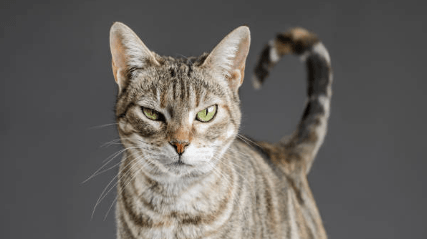
Cat body language is one of the great mysteries of pet parenthood. Dogs basically wear their hearts on their wagging tails — but cats? Cats communicate through a system of subtle, often contradictory signals seemingly designed to confuse you. Misread the signs and you go in for a snuggle, get a swat, and spend the rest of the evening wondering what you did wrong. Your cat isn’t moody or antisocial — they’re just speaking a different language, one that includes approximately seven different ways to say “Get out of my space” using nothing but their tail. Once you learn to read it, you’ll realize your cat has been trying to tell you things this whole time. You just weren’t listening.
The Tail Tells (Almost) Everything
If you only learn to read one part of cat body language, make it the tail. It’s basically your cat’s emotional broadcasting antenna — and yes, it has a LOT to say. A tail held straight up like a flagpole means your cat is genuinely thrilled to see you (this is rarer than you’d think, so don’t take it for granted). A puffed-up “bottle brush” tail means something just terrified them — possibly the vacuum, possibly a stray sound, possibly a perfectly innocent cucumber you forgot on the floor.
The most important signal to learn is the flick or thrash. This is the one cat parents miss most often, and it’s why so many “sudden” cat bites happen during petting. Your cat wasn’t being unpredictable — they were warning you for at least 30 seconds before they finally took matters into their own paws. Listen to that tail and you’ll save yourself a lot of unexpected swats.
The Eyes Have It (Mostly Judgment)
Cat eyes are remarkably expressive once you know what to look for. And yes, sometimes the expression is “I cannot believe I have to live with you.” But not always! The most magical signal is the slow blink — often called “the cat kiss.” When your cat slowly closes and opens their eyes at you, that’s pure trust and affection. The best part? You can return it. Slow blink back at your cat and you’re literally telling them “I love being here with you” in fluent feline. Most cats absolutely melt for it.
A hard, unblinking stare is the opposite — that’s either a challenge or a deep philosophical question. Either way, blink first. And if your cat avoids eye contact entirely, don’t take it personally; in cat etiquette, NOT staring is actually the polite move.
Ears: The Mood Antennas
Cat ears swivel constantly because cats are basically little radar dishes wrapped in fur. But their POSITION tells you everything about their mood. Forward and upright means they’re engaged. Slightly to the side — what cat people call “airplane ears” — means uncertain or mildly annoyed. Think of it as the feline equivalent of crossed arms.
Flat back against the head is Defcon 1. Back. Off. Immediately. Airplane ears during petting are an underrated warning sign — most pet parents miss them entirely. If you see them, that’s your cue to gracefully retreat before the situation escalates.
Body Posture: The Full-Body Story
Beyond the tail, eyes, and ears, your cat’s overall posture rounds out the picture. An exposed belly is a trust fall, NOT a permission slip — many cats absolutely hate belly rubs even when they show their tummy. Touch at your own risk. You’ve been warned.
Bunting (head-butting you) is your cat scent-marking you as their property. Congratulations, you’re family now. Kneading — also called “making biscuits” — is pure contentment. Your cat is in their happy place. Do not move. Do not breathe loudly. And if you ever see the classic Halloween-cat pose (arched back, puffed fur, sideways stance), something just frightened them. Give space.

When Cat Body Language Signals a Problem
Cats are evolutionary masters of hiding pain — a survival trait that makes them terrible patients. But subtle cat body language often reveals what they refuse to say out loud. Watch for hunched posture, hiding more than usual, decreased grooming, reluctance to jump up to favorite spots, or unusual squinting. Any of these lasting more than a day or two warrants a call to your vet. The ASPCA has excellent resources on monitoring cat health for ongoing reference.
Why Cats Need Sitters Who Speak Their Language
Not all pet sitters understand cat body language — and your cat KNOWS. A walker who’s great with dogs may completely miss the airplane ears, the tail flick, the “I’m overwhelmed” body posture. The result? A stressed-out kitty who hides under the bed for the entire visit and gives you the silent treatment when you get home. Every Walking Wet Noses team member is trained specifically on feline communication. We respect cat boundaries, recognize subtle warning signs, and know that a “good visit” is measured in their comfort, not in how much we got them to interact.
For senior cats and cats with anxiety, mobility issues, or cognitive decline, our Grey Muzzles and Wise Whiskers — Patient, Senior-Focused Care for Every Season of Life program provides the gentle, attentive care that older cats genuinely need.
Need a Cat Sitter Who Truly Understands Cats?
Whether you’re traveling, working long hours, or just want a trusted set of eyes on your kitty, Walking Wet Noses provides expert cat care across Fairfax, Vienna, Oakton, Burke, Chantilly, and Centreville. Visit walkingwetnoses.com to schedule a free meet-and-greet. Your kitty will thank you — probably with a slow blink, a bunt to the leg, and a brief moment of approval before returning to their nap.


Recent Comments