
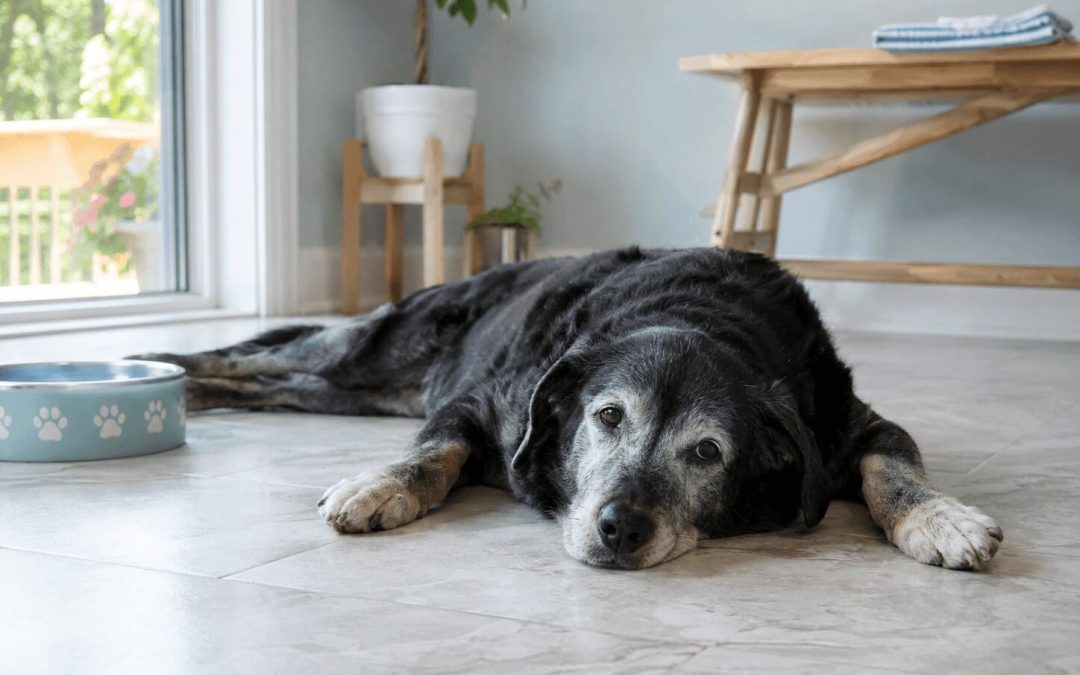
Here’s a myth worth busting: “My dog has been doing summer just fine for ten years. He doesn’t need any extra fuss now.”
It’s a sentence we hear constantly. And it sounds reasonable — your dog has experience, after all. He knows the routine. He’s been through ten Northern Virginia summers and survived them all.
Except the dog who handled summer fine at age four is not the same dog at age ten. His cooling system is different. His kidneys are different. His heart, his joints, his ability to recognize when he’s in trouble — all different. Senior dog summer heat is one of those quiet problems where everything seems okay until suddenly it isn’t.
The body that handled August walks with a wag and a panting grin at age three is now a body that’s working a lot harder to do the same thing. And the warning signs that something’s gone wrong? They look exactly like “he’s just tired.”
If you’ve got a grey muzzle in the house, the summer playbook needs to change. Not dramatically. Just thoughtfully. Here’s how.
Why Senior Dog Summer Heat Is a Different Animal
Dogs don’t sweat the way we do. Their primary cooling tool is panting, with a small assist from the pads of their feet. That system works reasonably well for a healthy young dog. For an older one, it starts to break down in specific, sneaky ways.
Their hearts and lungs work harder. Senior dogs are more likely to have undiagnosed heart conditions, reduced lung capacity, or laryngeal paralysis — a common older-dog condition that affects breathing. Panting in heat puts extra strain on a system that’s already doing more than it used to.
Their kidneys are more vulnerable. Dehydration hits older kidneys much harder than younger ones, and many senior dogs already have early-stage kidney issues even if they haven’t been diagnosed. Even mild dehydration can tip a senior into trouble.
They regulate temperature less efficiently. Like older humans, senior dogs are slower to recognize and respond to overheating. They might keep walking when they should stop. They might sleep in a sunny spot that used to feel nice and not register that it’s now too warm.
Existing conditions stack the deck. Arthritis, diabetes, Cushing’s disease, heart conditions, obesity — all common in seniors, all things that make heat regulation harder.
The result is what makes senior dog summer heat so deceptive: an older dog can go from “doing fine” to “in real trouble” much faster than a younger one, with fewer warning signs along the way.
Senior Dog Summer Heat Symptoms That Look Like Nothing
A young dog overheating is usually obvious. Excessive panting, frantic energy, drooling, drama. You see it.
A senior dog overheating often looks like… nothing. Or rather, it looks like a senior dog. Slowing down. Lying still. Seeming “tired.” All things you might attribute to age before you’d attribute them to heat.
This is the part that catches even attentive pet parents off guard. The symptoms of senior dog summer heat aren’t louder in older pets — they’re quieter.
Watch for these subtler signs:
- Unusual stillness or unwillingness to get up when they normally would
- Confusion or disorientation — staring at walls, wandering aimlessly, missing familiar cues
- Heavier panting at rest that doesn’t slow within a few minutes of cooling down
- Gums that look pale, brick-red, or unusually dark
- Vomiting or loose stool in a dog who isn’t normally prone to either
- Weakness in the back legs or stumbling
- A “checked-out” expression — eyes that don’t track you the way they normally do
If you see any of these, treat it as a heat emergency. Move them to AC, offer cool water, wet their belly and paws with cool (not ice-cold) water, and call your vet. With seniors, it’s always better to overreact than to wait and see. The “wait and see” approach is how a manageable situation becomes an emergency room visit.
The New Senior Dog Summer Heat Rules
Most of what follows isn’t dramatic. It’s mostly common sense, applied with a little more care than you used to need.
Walk in narrower windows. The “before 8 a.m. and after 9 p.m.” rule for hot weather is a starting point for any dog. For seniors, tighten it further. Aim for the genuinely cool parts of the day, and skip walks entirely when temperatures or humidity are extreme.
Shorten the walks themselves. Your senior dog’s heart and lungs aren’t doing the same work they did three years ago. A 15-minute walk in summer can be plenty. Mental enrichment indoors is a perfectly good substitute on the worst days.
Build in more breaks. Even on a short walk, pause in shade. Let them sniff. Offer water from a portable bottle. Watch their breathing pattern, not just their pace. Recognizing senior dog summer heat stress early is much easier when you’re paying attention to small cues.
Adjust the surface. Older dogs with stiff joints often prefer grass or dirt anyway, and those surfaces stay much cooler than asphalt. Managing senior dog summer heat is often as simple as finding the routes that maximize soft, shaded ground.
Mind the AC. Your senior dog should have access to an air-conditioned space at all times during summer. Tile floors, cooling mats, or a damp towel to lie on can help even more. Senior dogs often pick odd new resting spots in hot weather — let them. They’re trying to find cool surfaces. The bathroom floor is suddenly the best room in the house, and they know it.
Hydration matters more than ever. Make sure water is always cold and always fresh. Some senior dogs drink less as they age — sometimes due to mobility, sometimes to early kidney changes — so consider adding a second water bowl in another room, or a pet fountain to encourage drinking.
What to Skip Entirely With Senior Dogs in Heat
When managing senior dog summer heat, a few things that work for younger dogs are not appropriate for seniors:
Long car rides without strong AC. Even a few minutes in a warm car can be dangerous for an older dog.
Outdoor events. Festivals, outdoor markets, patio dining. Hot pavement, no shade, lots of stimulation, hours away from a cool room. Skip these for your senior, even if they used to be a regular companion.
“Just letting them out in the yard.” A young dog will come back inside when they’re hot. A senior dog might not realize they need to. Always supervise, and keep yard time short.
Cold water immersion. If your senior is overheating, do not dunk them in ice water or use ice packs. Sudden cooling can cause shock, especially in dogs with heart conditions. Use cool — not cold — water on their belly, paws, and ears, and call your vet.
The Honest Conversation About Time
Here’s the part nobody loves talking about: senior dogs have less time, and that changes how we approach senior dog summer heat.
A few weeks of restricted summer activity isn’t depriving your dog of anything important. They’ve earned the right to nap through July. They’ve earned the right to a slow, sniffy 10-minute walk instead of the brisk 30-minute one they used to demand. They’ve earned the right to a frozen lick mat on a tile floor while you handle the yard work alone.
The goal of senior pet care isn’t to keep them doing all the things they used to do. It’s to keep them comfortable, safe, and engaged in the things they can still enjoy. That mindset shift is the single biggest thing you can give your aging dog this summer.
A Note on Adopting a Senior Dog
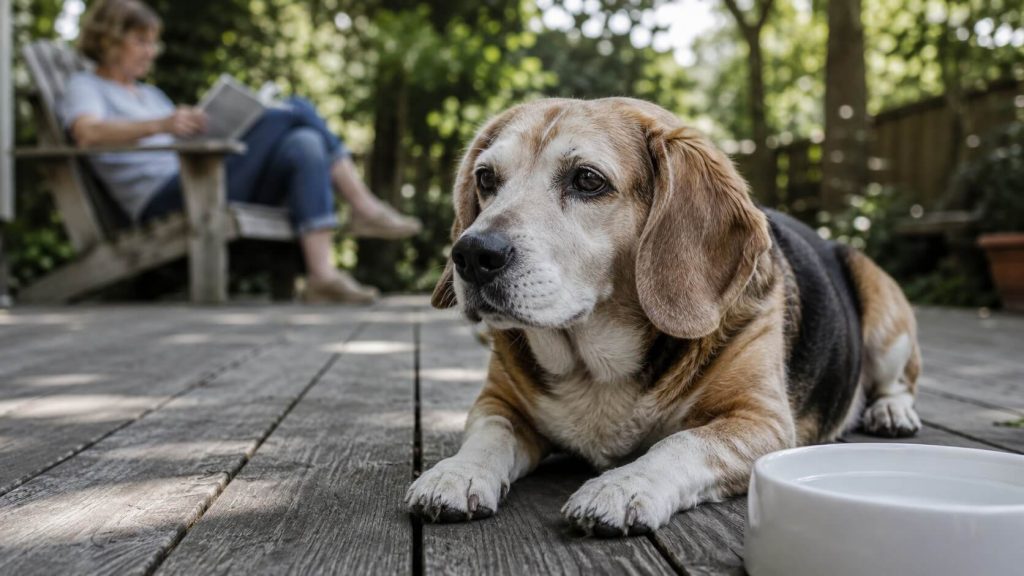
If you’re reading this and don’t yet have a senior dog of your own, consider opening your home to one this summer. Organizations like Little Friends Senior Dog Sanctuary — a local rescue we work with closely — specialize in placing older dogs into homes where they can enjoy whatever time they have left in comfort and dignity. These are the dogs who often get passed over at shelters because they’re not puppies. They’re also, in our experience, some of the most grateful and gentle companions you’ll ever meet. With a little awareness of senior dog summer heat and a few thoughtful adjustments, an older dog can thrive in your home.
Senior dogs come pre-loved, pre-trained, and pre-housebroken. They don’t need a backyard. They don’t need three-hour walks. They need a couch, a soft bed, and someone who’ll notice when they’re not feeling quite themselves. Which, if you’ve made it this far in this post, is clearly you.
When You Need a Hand With Your Senior Dog
Senior dogs often need more midday check-ins, not fewer — and senior dog summer heat is one of the biggest reasons why. The bladder doesn’t hold what it used to. The medication schedule has gotten more complicated. The “I’ll just let her out when I get home” plan that worked five years ago doesn’t really work anymore — and forcing it can mean accidents, discomfort, and a dog who’s been waiting alone in the heat all afternoon.
Our Grey Muzzles and Wise Whiskers senior pet care service is specifically built for this stage. Slower walks. Shorter visits. Patience with the dog who needs help getting up off the rug, the cat who wants a longer chin scratch than she used to, the rabbit who’s gotten a little more particular about her routine. We watch for the subtle stuff — the gum color check, the gait that’s slightly off, the panting that doesn’t quite settle — because we know seniors don’t always announce when something’s wrong.
We also know that summer is when senior pet care matters most. Heat doesn’t care that your dog is twelve and used to handle it fine. The new rules of senior dog summer heat are about adapting alongside your pet, not asking them to adapt to a schedule that no longer fits them.
If your senior dog is heading into their first really hot summer with you, or their tenth, reach out. We’re happy to talk through what midday support could look like, and how we approach senior dog summer heat for each individual pet, with no pressure to commit.
The Bottom Line on Senior Dogs and Summer Heat
Senior dog summer heat shows us that older dogs aren’t the same animals they were five years ago, and summer is one of the seasons where that shows up most. Tighter walk windows, softer surfaces, more breaks, closer monitoring, and a willingness to skip the walk entirely when the weather doesn’t cooperate.
It’s not about doing less for them. It’s about doing the right things, at the right pace, for the dog they are now.
The grey muzzle has earned the air conditioning. Let them have it.
Recent Comments