
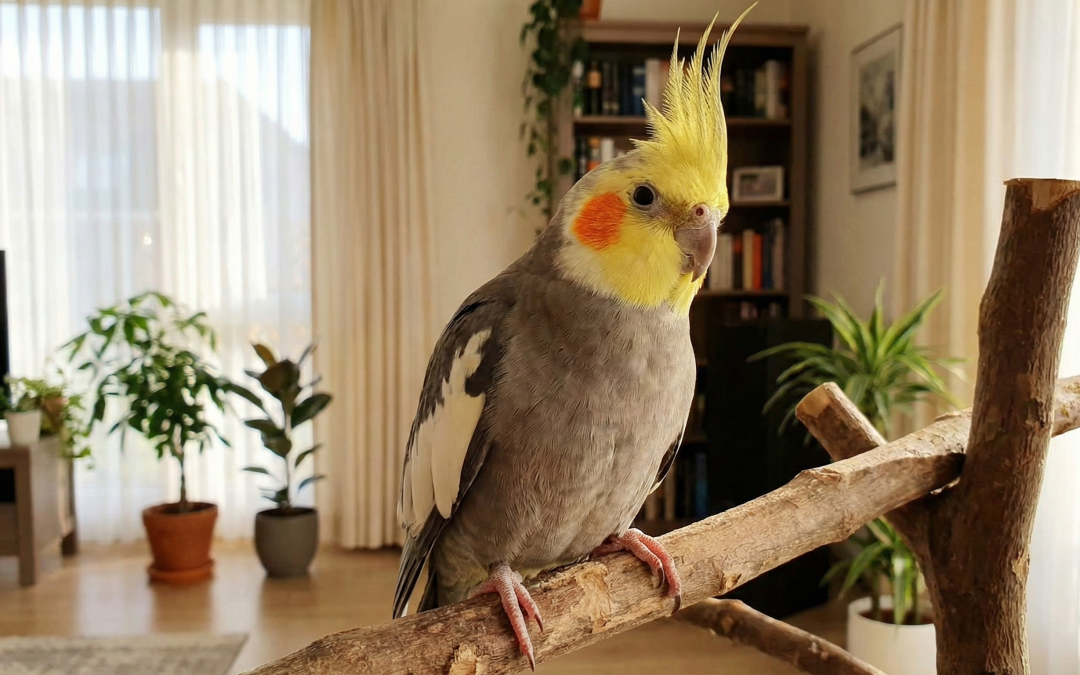
Winter bird safety starts with three things most pet owners overlook: drafts, temperature swings, and disappearing daylight. Sure, winter is cozy for us humans — fuzzy blankets, hot cocoa, the perfect excuse to stay indoors. But for pet birds? It can feel a little like living inside a snow globe that someone keeps shaking. The heat kicks on and off, the air gets drier than a cracker, and the sun disappears before dinner like it has somewhere better to be.
At Walking Wet Noses, we care for a lot of feathered family members across Fairfax, Vienna, Oakton, Chantilly, Centreville, and Burke — and every winter, we notice the same patterns. Most winter bird issues come down to three sneaky culprits: drafts, temperature swings, and disrupted lighting. The great news? You don’t need to turn your home into a tropical rainforest to fix them. You just need to know what to look for.
The Draft Problem: It’s Sneakier Than You Think
Drafts are the villain of winter bird care, and the tricky part is that they’re often invisible. We’ve visited beautiful bird setups — cages by sliding glass doors “for the view,” near busy hallways “so they can see the action,” or right by a window “for natural light.” All lovely ideas. All potentially drafty problems.
Birds are sensitive to airflow in ways we barely notice ourselves. A cool breeze that feels mild to you can cause real stress for a bird, leading to feather fluffing, reduced activity, quieter vocalizations, and in some cases, illness. And in winter, drafts aren’t just from open windows — they come from heating vents blowing directly on the cage, ceiling fans left running, exterior doors that open frequently, and even cold seeping in from walls near windows.
Signs your bird’s setup might be too drafty:
- They seem fluffed up more than usual (birds fluff to conserve heat)
- They’ve gotten quieter or less interactive
- They’re spending more time at the bottom of the cage
- You can feel cool air movement near the cage when you sit nearby
The fix is usually simple: move the cage a few feet away from the draft line. That small shift can make a dramatic difference in comfort level. When in doubt, sit at cage height in the same spot and feel for airflow. Your bird will thank you.
Temperature: Steady Wins the Race
Birds aren’t fans of dramatic temperature swings — and winter heating cycles can create exactly that. The furnace kicks on, the room heats up fast, then it cycles off and cools back down. Repeat all day. Add in dry air from forced-air heat, and you’ve got a comfort challenge on your hands.
Most companion birds do best in a room that stays in the 65–80°F range, but consistency matters more than hitting a specific number. A bird that lives at a steady 68°F is going to be far happier than one riding a rollercoaster between 62°F and 76°F throughout the day.
Winter temperature tips that actually help:
- Keep the cage away from radiators, fireplaces, space heaters, and direct heating vents — even if the spot looks cozy
- Avoid placing cages on exterior walls or near windows that get cold at night
- If your home runs dry in winter, consider a humidifier in the room (not aimed at the cage — just helping the ambient air)
- Check the room temp at different times of day, not just once — morning cold and afternoon heat can be very different stories
If you’re ever unsure what’s right for your specific bird species, your avian vet is the best resource. Some birds have different tolerance ranges, and what works for a cockatiel may not be ideal for a conure or an African grey.
Winter Lighting: Short Days, Cranky Birds
Here’s something that surprises a lot of bird owners: the dramatic shift in daylight hours during winter genuinely affects your bird’s mood, sleep, and behavior. Birds are naturally attuned to light cycles, and when those cycles get disrupted — dark at 4:30 PM, lights blazing inside until 10 PM, then sudden darkness — it throws off their internal clock.
The result? Birds that are overtired, under-rested, grumpy, overly hormonal, or just generally “off.” You might notice more screaming, less singing, unusual feather behavior, or a bird that seems listless during the day because their nights have been chaotic.
Creating a bird-friendly winter light routine:
- Aim for 10–12 hours of sleep per night — consistent bedtime and wake time matter
- At bedtime, move them (or cover the cage with a breathable cover) to a quieter, dimmer space away from TV light and noise
- During the day, make sure they get good light exposure — natural window light is great, though be mindful of drafts
- If your home is particularly dark in winter, ask your avian vet whether a bird-safe full-spectrum light might be appropriate for your bird’s species and needs
The key word is consistent. Birds love routine the way we love a reliable coffee order — change it and things go sideways fast.
Your Winter Bird Wellness Check
Do a quick walk-through of your bird’s setup with fresh eyes this season. Here’s what you’re looking for:
Drafts: Is the cage near exterior doors, windows, ceiling fans, or vents? Can you feel any airflow at cage level?
Temperature: Is the room staying consistent throughout the day? Is the air getting uncomfortably dry?
Lighting: Is your bird getting 10–12 hours of consistent sleep? Is the sleep space quiet and dim?
Behavior: Any changes in appetite, energy, vocalizations, or feather condition should prompt a call to your avian vet — birds tend to hide discomfort, so behavioral changes are often the first real signal.
If everything checks out, great — keep doing what you’re doing. If something seems off, even small adjustments can make a big difference in how your bird feels and behaves through the rest of winter.
FAQs: Winter Bird Care Edition
Can I use a space heater near my bird’s cage? Use caution. Keep heaters at a distance, never direct airflow toward the cage, and prioritize stable room temperature over quick warm-ups. Also avoid non-stick coated heaters — when heated, these can release fumes that are dangerous to birds.
Is it safe to cover the cage at night? Yes, for most birds. Use a breathable fabric cover and make sure ventilation isn’t blocked. A cover helps signal “sleep time” and keeps the environment darker and quieter.
How do I know if my bird is cold? Fluffed feathers, reduced activity, and huddling in place are the most common signs. If you’re seeing these consistently, check for drafts and temperature drops in the room.
When should I call my avian vet? Sooner rather than later — always. Birds are skilled at hiding illness, and by the time symptoms are obvious, things can be serious. Sudden appetite changes, prolonged fluffing, labored breathing, or unusual discharge warrant a prompt call.
The Bottom Line on Winter Bird Safety
You don’t need to overhaul your home to keep your bird healthy this winter. You just need to pay attention to the basics: draft-free placement, steady temperatures, and a consistent light and sleep routine. Boring? Maybe. Effective? Absolutely. Birds love boring — it’s us humans who keep making things complicated.
If you’re heading out of town or just need a reliable hand keeping your feathered family member on schedule, Walking Wet Noses is here for it. We provide experienced, caring pet sitting visits throughout Fairfax, Vienna, Oakton, Burke, Chantilly, and Centreville — and yes, that includes birds, guinea pigs, hamsters, and all the small animals who deserve great care too. Contact us here to get started.

Recent Comments